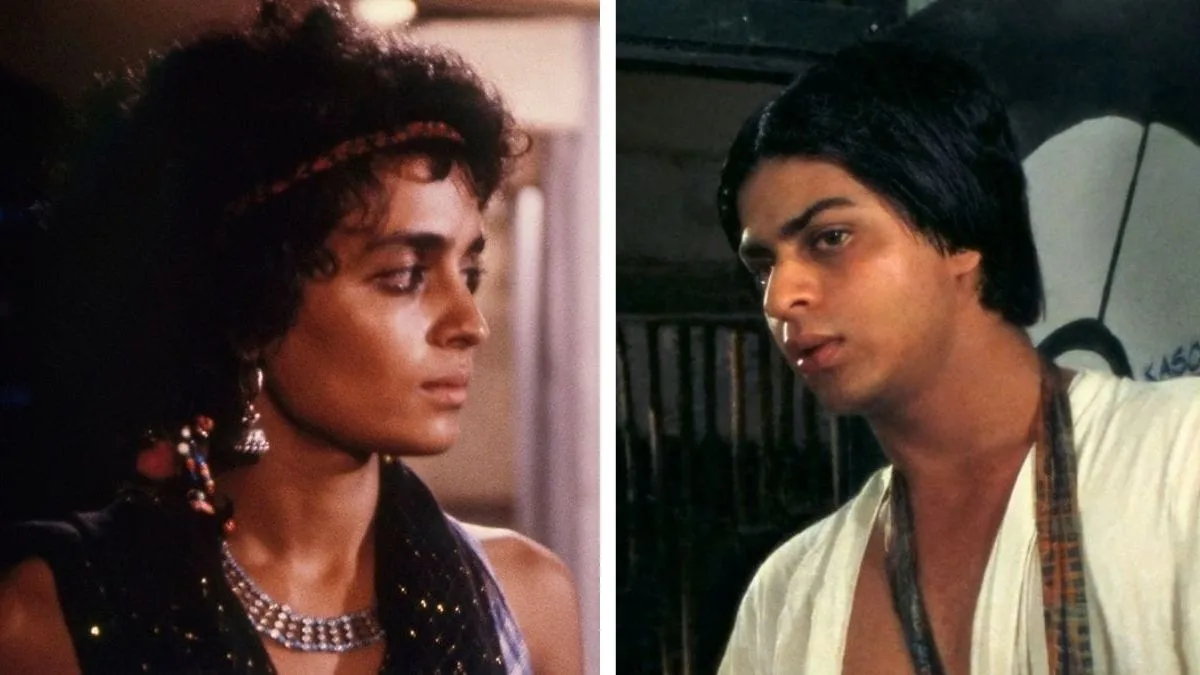
Guess who’s making a surprise return to the spotlight nearly four decades later? A scrappy, funny, rebellious little film that once blinked on Indian television and then vanished. Yes, Arundhati Roy’s early, rarely seen movie ‘In Which Annie Gives It Those Ones’ is finally having its red-carpet moment.
Before Arundhati Roy became the sharp, fearless writer the world knows today, before the Booker Prize and global debates, she was a young architecture student with stories buzzing in her head.
Advertisement
One of those stories turned into a film called ‘In Which Annie Gives It Those Ones’. Made in 1989, it quietly aired once on Doordarshan… and then almost disappeared.
Now comes the twist no one saw coming.
In 2026, this long-lost gem is returning in style. A 4K-restored version of the film will premiere at the Berlin Film Festival, under the prestigious Berlinale Classics section.
Berlin gets a taste of old Delhi campus life
The Berlin Film Festival has selected only ten restored films from around the world for its Classics section in 2026. Roy’s film is one of them.
Even better, both Arundhati Roy and director Pradip Krishen are likely to attend the screening. For cinema lovers, this is history coming alive.
The Berlinale Classics section this year is being called the festival’s most ambitious yet, with films ranging from the silent era to the 1990s.
What is the film actually about?
At its heart, this is a campus story, but not the glossy, song-filled kind.
Set in an architecture school in Delhi in the mid-1970s, the film follows a sharp-tongued, restless student named Anand Grover, better known as Annie. He’s idealistic, reckless, funny, and always on the edge of trouble.
Annie’s biggest problem? His mouth.
He openly mocks the strict, authoritarian college principal YD Billimoria, whom students sarcastically nickname Yamdoot, the god of death. As expected, this does not end well.
What unfolds is part comedy, part rebellion, part social portrait. The film captures a generation of young Indians juggling ambition, confusion, politics, friendship, fear.
Arundhati Roy: Writer, actor, insider
This wasn’t just another writing job for Roy.
‘In Which Annie Gives It Those Ones’ was her first screenplay. She also played a major role in the film. Long before international fame, Roy pulled directly from her own life as a student at the School of Planning and Architecture, Delhi.
The slang, the jokes, the late-night arguments, the boredom, the rebellion; it all came from lived experience. That authenticity is exactly why the film still feels fresh today.
Back then, Indian cinema rarely focused on English-speaking student subcultures. Roy and Krishen decided to show that world exactly as it was: messy, clever, confused, and alive.
Spot the future superstars
Here’s where things get really fun.
The film features early appearances by Shah Rukh Khan and Manoj Bajpayee, long before superstardom. At the time, both were active in Delhi’s theatre scene, hungry and unknown.
They don’t have big roles, but they make an impression. The lead cast includes Arjun Raina, Roshan Seth, and Arundhati Roy herself.
A creative partnership built on memory
Roy and director Pradip Krishen were not strangers when they made ‘Annie’. They had already collaborated on the 1985 colonial-era drama ‘Massey Sahib’.
After ‘Annie’, they worked together once more on ‘Electric Moon’ in 1992, again with Roy writing and Krishen directing. But ‘Annie’ remained their most personal project.
Krishen has often said the film was unusual for its time. No filters. No pretending. Just students speaking their own language.
One telecast… then silence
Here’s the tragedy.
Despite its originality, the film was shown only once on television. After that, it vanished. No reruns. No easy access. No official circulation.
Krishen later reflected on this strange disappearance, saying that the film went underground despite being unique in Indian cinema. For years, it survived only through rare recordings and word-of-mouth praise.
And yet, those who saw it never forgot it.
How the film was saved
The rescue mission began when Krishen donated his film materials to the Film Heritage Foundation.
From there, a careful, loving restoration process began. Using the original 16 mm camera negative and a 35 mm print, the foundation worked with L’Immagine Ritrovata’s laboratory, along with the National Film Development Corporation and the National Film Archive of India.
The result: a stunning 4K restoration that gives the film a brand-new life.
Krishen has admitted he never imagined this second innings. Seeing the film selected for a world premiere in Berlin is, in his words, pure delight.